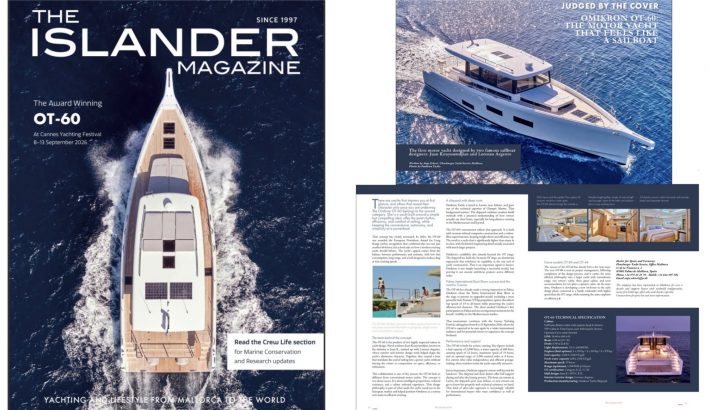
Omikron OT-60 – our article in THE ISLANDER MAGAZINE

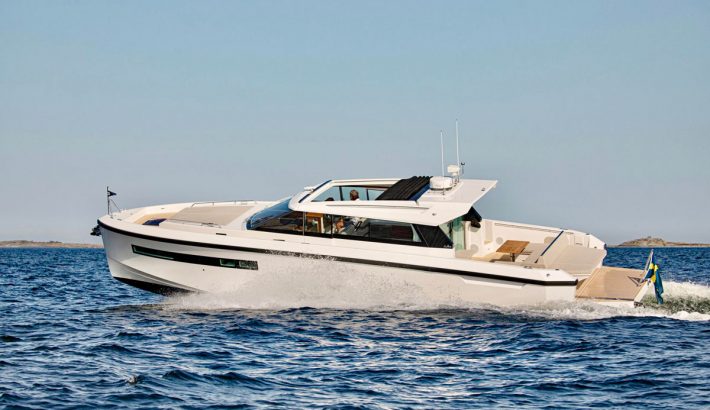
There are yachts that impress you at first glance, and others that reveal their character only once you are underway. The Omikron OT-60 belongs to the second category. She is a yacht built around a simple but compelling idea: offer the quiet rhythm, efficiency, and comfort of sailing, while keeping the convenience, autonomy, and simplicity of a powerboat.

That concept has clearly resonated. In 2024, the OT-60 was awarded the European Powerboat Award for Long Range yachts, recognition that confirmed this was not just another 60-footer, but a fresh take on how a modern cruising yacht should behave. The yacht’s appeal comes from the balance between performance and restraint, with low fuel consumption, long range, and a hull designed to reduce drag at true cruising speeds.

The team behind the concept

The OT-60 is the product of two highly respected names in yacht design. Naval architect Juan Kouyoumdjian, known in the industry as Juan K., teamed up with Lorenzo Argento, whose exterior and interior design work helped shape the yacht’s distinctive character. Together, they created a boat that translates the soul of sailing into a power yacht, without forcing the owner to compromise on space, efficiency, or refinement.

This collaboration is one of the reasons the OT-60 feels so different from conventional motor yachts. The concept is not about excess. It is about intelligent proportions, reduced resistance, and a calmer onboard experience. That design philosophy is part of what made the yacht stand out in the European market and helped position Omikron as a serious new name in efficient cruising.

A shipyard with deep roots

Omikron Yachts is based in Lavrio, near Athens, and grew out of the technical expertise of Olympic Marine. That background matters. The shipyard combines modern build methods with a practical understanding of how owners actually use their boats, especially for long-distance cruising in the Mediterranean and beyond.

The OT-60’s construction reflects that approach. It is built with vacuum-infused composite construction and a carbon-fibre superstructure, keeping weight down and efficiency up. The result is a yacht that is significantly lighter than many in its class, with the kind of engineering detail usually associated with much larger projects.

Omikron’s credibility also extends beyond the OT range. The shipyard has built the 54-metre SY Argo, an aluminium superyacht that reinforces its capability at the top end of yacht construction. That is an important signal to buyers: Omikron is not simply launching a successful model, but proving it can execute ambitious projects across different scales.

Palma International Boat Show success and the road to Cannes

The OT-60 has already made a strong impression in Palma. Omikron chose the Palma International Boat Show as the stage to present an upgraded model, including a more powerful twin-Yanmar 370 hp propulsion option that allows top speeds of 19 to 20 knots while preserving the yacht’s efficiency-led character. The show marked Omikron’s first participation in Palma and was an important moment for the brand’s visibility in the Mediterranean market.

That momentum continues with the Cannes Yachting Festival, taking place from 8 to 13 September 2026, where the OT-60 is expected to be seen again by a wider international audience and for potential owners to experience the concept firsthand.

Performance and support

The OT-60 is built for serious cruising. Key figures include a fuel capacity of 2,000 litres, a water capacity of 600 litres, cruising speed of 12 knots, maximum speed of 19 knots, and an optimal range of 1,900 nautical miles at 8 knots. For owners who value independence and efficient passage-making, those numbers make the yacht especially attractive.

Just as important, Omikron supports owners well beyond the handover. The shipyard and their dealers offer full support during and after the buying process. The boat can remain in Lavrio, the shipyard’s port near Athens, so new owners can get to know her properly with technical assistance on hand. That kind of after-sales approach is increasingly valuable for international buyers who want confidence as well as performance.

Future models OT-80 and OT-44

The success of the OT-60 has already led to the next steps. The new OT-80 is now in project management, following completion of the design process, and it carries the same efficient philosophy into a larger yacht with transatlantic range, one owner’s cabin, three guest cabins, and crew accommodation for two plus a captain’s cabin. At the same time, Omikron is developing a new 44-footer in the early design phase, conceived as a family weekender with higher speed than the OT range, while retaining the same emphasis on efficiency.

OT-60 TECHNICAL SPECIFICATION

Cabins: Full beam Master cabin with separate head & shower, VIP Cabin & Twin Guest, each with head & shower, Optional Crew cabin forward

LOA: 18.40 m (60.4 ft)
Beam: 6.00 m (19.7 ft)
Draft: 0.90 m (2.8 ft)
Light displacement: 18.5 t (40,800 lb)
Engines (dual options): 2 x 150 hp / 2 x 250 hp / 2 x 370 hp
Fuel capacity: 2,000 L (528 US gal)
Fresh water capacity: 600 L (158 US gal)
Maximum speed: 19 knots
Range (optimum): 1,900 NM @ 8 knots
CE certification: Category A-12 / C-30
Hull design: Juan K / JYD C.F.D.
Interior/exterior design: Lorenzo Argento
Production/manufacturing: Omikron Yachts Shipyard

Link to The Islander Magazine: Page 12 to 15: https://theislander.online/online-paper-magazine/

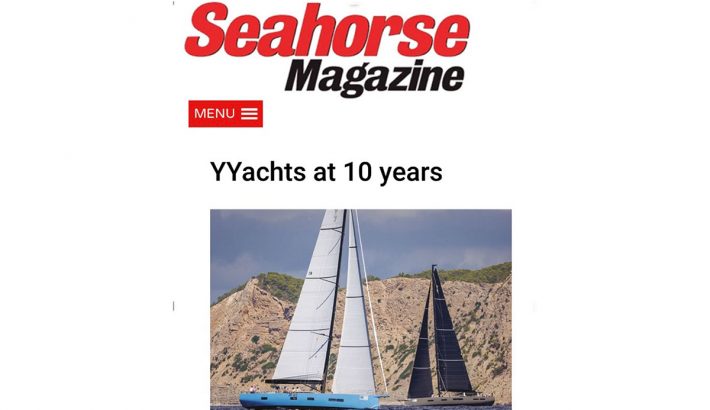
Y Yacht at 10 Years – our article in Seahorse Magazine

This north German boatbuilder has carved a remarkably successful niche by sticking resolutely to its founding principle of keeping things simple

When Michael Schmidt completed Cool Breeze in Greifswald in 2015, he was not, he insists, trying to start a company. He was trying to build a yacht he actually wanted to sail. This is a familiar origin story at the specialist end of the yacht business and it is worth treating with a degree of scepticism. In Schmidt’s case, however, the biography makes it rather more plausible than most.

Schmidt has more than five decades in the trade. He was a leading offshore racer during the first Admiral’s Cup era, building carbon race boats at Yachtwerft Wedel before the material became fashionable. He then founded Hanse Yachts and grew it to be the world’s thirdlargest production boatbuilder. After all that, he arrived at a clear, unfashionable conclusion: most large sailing yachts were too heavy, too complicated and also not sufficiently fun or engaging to sail.

Cool Breeze was the prototype for what would become YYachts. The company was formally established the following year. Ten years later, more than 55 carbon fibre hulls have left the shipyard. ‘Fifty years of building fast boats distilled into 10 years of YYachts,’ is how Schmidt explains it. ‘That is what you are sailing.’

Experience applied
YYachts is not a young company in the usual sense. It is the concentrated product of accumulated experience applied without particular deference to convention. Schmidt’s carbon fibre work in the 1970s and 1980s includes notable offshore racers such as Blaupunkt and Gaviosa. This pre-dates the material’s adoption in mainstream yacht construction by at least a good decade. His time at Hanse offered a rather different kind of education: what happens when the pressure to grow a business consistently outpaces the discipline to resist unnecessary complexity. Weight creeps in. Systems multiply. The pleasure of sailing quietly diminishes.

The technical team assembled at YYachts reflects the same accumulated depth. Several members bring 30 years or more of practical construction experience, across yachts from 45ft to well over 100ft. The yard remains deliberately compact, an explicit choice, not a constraint.

This density of experience matters more than it might appear. Yards that produce thoughtful, well-built yachts consistently over time tend not to be staffed by enthusiasts learning as they go. They tend to be staffed by people who have already made the expensive mistakes somewhere else.

Carbon construction, weight matters
A full carbon fibre-epoxy composite structure delivers a significantly higher stiffness-to-weight ratio than conventional GRP construction. Lower structural weight reduces displacement and allows a greater proportion of the yacht’s mass to be concentrated in ballast rather than spread across the fabric of the hull.

The benefits of carbon construction extend beyond performance figures. The weight saving of carbon compared with a conventional glassfibre yacht of similar size is substantial. The effect on a yacht’s light-air sailing ability is immediately apparent and for a typical yacht owner, this is the most obvious advantage because they tend to spend the majority of their sailing time in relatively light wind conditions. When heavier cruising yachts reach for the starter button, a boat with a properly light carbon hull continues to sail.

The art of simplification
YYachts’ guiding principle, keep it simple, functions as engineering logic before it becomes marketing language. Reduce displacement and you reduce rig loads, then you can specify smaller engines. Smaller engines mean simpler systems and lower fuel consumption over the yacht’s working life.

This argument is straightforward and it is one that many yacht building yards acknowledge in principle, while quietly ignoring it in practice. YYachts has been more consistent than most. ‘Every system you remove is a failure that will never happen,’ Schmidt explains. ‘Keep it simple and the sailing gets better.’

The deck layout of a YYacht is stripped back to the essentials of sailing. Halyards, sheets and control lines are led aft to twin helm stations, placing full management within reach of a single helmsman or a couple sailing without professional crew.

The same logic governs the interior. Rather than defaulting to the usual yacht interior designers, YYachts has quite often worked with eminent designers from outside the marine sector, pairing their instinct for proportion and restraint with the shipyard’s own technical knowledge.

These collaborations have included world-renowned architects such as Sir David Chipperfield, Norm Architects and David Thulstrup as well as yacht design specialists like Winch Design and Mark Tucker (Design Unlimited). The results feel less like conventional yacht cabins and more like considered, compact living spaces that happen to float. The interior and exterior share one design language rather than speaking of separate origins. This coherence is rarer in production sailing yachts than it ought to be.

Collaboration, not repetition
One aspect of the YYachts programme that receives rather less attention than it merits is the deliberate use of different design partners across the fleet.

Many yards, once they are commercially established, settle into a working relationship with a single naval architect and iterate cautiously around a proven platform. YYachts has not done that.

The fleet
The original Y8 and her two sister ships were built to a design by Lorenzo Argento at Brenta, whose proportions set the visual character of the first generation. Bill Tripp’s offshore experience brought considerable rigour to the Y7 and Y9.

The second-generation Y8, widely regarded as the defining yacht of the range, was developed with Javier Jaudenes at Surge Projects, whose racing background produced a particularly effective combination of generous beam and modest displacement.

The new Y7 has been comprehensively reworked by judel/vrolijk & co. Meanwhile, Tripp has returned to design the new Y6.

Whether this approach produces a coherent fleet identity is a reasonable question. The answer appears to be yes, but only because the philosophy imposes more consistency than the choice of naval architect. Each collaboration requires the yard to rebuild a working relationship from scratch, which is not the most efficient way to run a design programme. It is, however, likely to keep producing results that are at least interesting, and at best rather better than that.

The YYachts shipyard in Greifswald builds full carbon composite sailing yachts from 20m to 35m in length

A decade in brief 2015-2026

55+
Hulls delivered
10
Years in production
20+
Y7s delivered
5+
Awards


Milestones Awards Programme for 2026
2015 First yacht Cool Breeze: Lorenzo Argento (Brenta Design) & Sir David Chipperfield
2016 Foundation of YYachts GmbH
2018 Y7 launched, Bill Tripp design
2018 Custom research vessel Eugen Seibold for Max Planck Institute
2021 Prevail (Tripp 90) launched. Palma design office expands
2022 New Y8 launched, design by Javier Jaudenes (Surge Projects)
2025 Y6 unveiled. 65ft Bill Tripp design for owner-operators
2025 New Y7 with judel/vrolijk & co
2026 55+ hulls delivered, further builds in production
2016 Vela & Motore: Barca dell’anno – Y8 Cool Breeze
2020 Wallpaper Award: Best cabin – Y7 Bella
2022 Design Innovation Award, Genoa Boat Show – Y7 interior design
2023 Nautical Tourism Awards (LUX life) – Best luxury sailing yacht builder
2023 Best new sailboat, Newport International Boat Show – Y7 Miss Shell
2023 BOAT Design & Innovation Award: Outstanding exterior design – Y9 Bella
2024 Design Innovation Award, Genoa Boat Show – Y8 Calabash
Apr 2026 New Y7 premiere at Palma International Boat Show
Jun 2026 Inaugural YYachts Cup, 30th anniversary Palma Superyacht Cup
Sep 2026 New Y6, first deliveries begin


Y8, the keystone model

The second-generation 24m (80ft) Y8 is the fullest single expression of what YYachts is attempting. Developed with Javier Jaudenes, the hull combines generous beam with a displacement considerably below that of a comparable glassfibre yacht of similar length. Blue water capability without the weight penalty is the proposition. The evidence, after many ocean miles accumulated across the fleet, suggests that it largely delivers.

Available in standard, pilot house and custom interior configurations, the Y8 attracts owners who want serious passage-making performance without the overhead of a permanent professional crew. In that specific market, it does not have many rivals.

Y7, the bestseller, now redesigned

The original Bill Tripp-designed Y7 was the commercial engine of the YYachts yard: 20+ deliveries worldwide, a boat show award that opened the American market, and a decade of owner feedback that confirmed the design’s strengths while making clear where it could go further. The new Y7, developed with judel/vrolijk & co, addresses exactly that feedback. Among its key features are a redesigned asymmetric cockpit, a starboard U-sofa in the saloon, a dedicated aft engine room in place of the earlier under-saloon installation, and a crew companionway integrated discreetly without disturbing the deck architecture.

The yacht made its debut at Palma Boat Show in April. Twenty deliveries in eight years is a solid result for a full carbon composite yacht in this price bracket. Whether a comprehensively redesigned model can sustain that momentum is the more interesting question. The early market response suggests optimism is not unreasonable.

Y6, the latest model
The newest model in the range brings the YYachts philosophy to just under 20m (65ft). Designed by Bill Tripp specifically for owner-operators, the Y6 leads all sailhandling systems aft to the helm stations, allowing complete control from the cockpit. Carbon construction keeps displacement low while maintaining genuine offshore capability. An integrated bow thruster simplifies harbour manoeuvres. First deliveries are scheduled for autumn 2026.

YCustom division, to 35m Beyond the series fleet, the YCustom division has delivered Prevail, a 27m (90ft) Bill Tripp-designed carbon sloop with Winch Design interiors, launched in 2021 and combining regatta capability with long-range cruising comfort. Another full custom build project is Eugen Seibold, a research vessel built for the Werner Siemens Foundation and the Max Planck Institute. Launched in 2018, the centenary of her namesake’s birth, she pursues active scientific research. Together they suggest a technical range that the YYachts standard series models, impressive as they are, do not fully convey.

Looking ahead
Ten years on and 55+ hulls later, YYachts occupies an unusual position in the carbon sailing yacht market: coherent, respected and still small enough that quality control remains a matter of direct attention rather than delegated procedure. The yard has resisted the temptation – a real temptation, once the orderbook fills – to pursue volume at the expense of the founding brief.

Whether that discipline survives sustained commercial success is the more searching question. Yards that begin with a strong founding philosophy have a mixed record of preserving it through growth. Schmidt has navigated that passage once before, at Hanse, with instructive results. At YYachts, his answer appears to be to keep the yard deliberately compact: fewer yachts, built properly, by people who actually know what they are doing.

In a market where the prevailing pressure runs towards larger interiors, marina-optimised aesthetics and systems of impressive complexity, there is something useful about a yard that continues to argue the opposite case. Not because simplicity is fashionable, but because the yachts it produces genuinely sail well. That, in the end, is the point.

This is the link for the full Seahorse article: https://www.seahorsemagazine.com/article/june-2026/yyachts-at-10-years

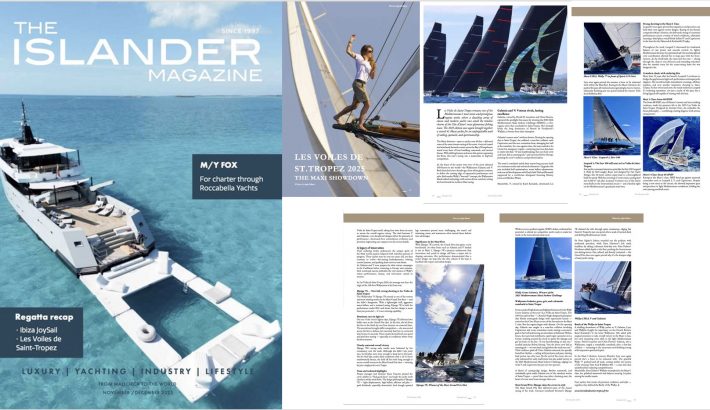
LES VOILES DE ST. TROPEZ 2025 – THE MAXI SHOWDOWN

Les Voiles de Saint-Tropez remains one of the Mediterranean’s most iconic and prestigious regatta weeks, where a dazzling array of classic and modern yachts race amid the timeless charm of the Côte d’Azur’s most glamorous fishing town. The 2025 edition once again brought together a record 41 Maxi yachts for an unforgettable week of sailing, spectacle, and sportsmanship.

Elite Racing in the Maxi Divisions

The Maxi divisions—open to yachts over 60 feet—delivered some of the most intense racing of the event. A mix of coastal and windward-leeward courses across the Bay of Pampelonne tested every facet of boat handling, teamwork, and tactical finesse. With shifting breezes and razor-thin points separating the fleets, this year’s racing was a masterclass in big-boat competition. At the heart of the action were two of the most admired 100-footers in the world—the Wallycentos Galateia and V.

Both launched over a decade ago, these white giants continue to define the cutting edge of superyacht performance and style. Built under Wally’s “box rule” concept, the Wallycentos blend radical technology with owner-driven comfort, setting the benchmark for modern Maxi racing.

Galateia and V: Veteran Rivals, Lasting Excellence

Galateia, owned by David M. Leuschen and Chris Flowers, captured the spotlight this season by winning the 2025 IMA Mediterranean Maxi Inshore Challenge (MMIC)—a five-regatta series that concluded in Saint-Tropez. Her triumph broke the long dominance of Benoît de Froidmont’s Wallyño, a former three-time champion.

Galateia’s season wasn’t without drama. During the opening day in Saint-Tropez, she suffered a start-line collision with Capricorno and the race committee boat, damaging her hull at the waterline. In a race against time, the team rushed to La Ciotat for emergency repairs—returning just two days later to rejoin the fleet. “It was heartbreaking, but our shore crew and team did an amazing job,” said tactician Kelvin Harrap, praising the crew’s resilience and professionalism.

The team’s comeback sealed their season-long success, built on consistent results and technical refinement. Upgrades this year included hull optimization, water ballast adjustments, and new sail development with Doyle Sails’ Richard Bouzaid, supported by a world-class afterguard featuring Murray Jones and Markus Weiser.

Meanwhile, V, owned by Karel Komárek, dominated Les Voiles de Saint-Tropez itself, taking four wins from six races to secure the overall regatta victory. The duel between V and Galateia—two decade-old designs still at the pinnacle of performance—showcased how commitment, evolution, and precision engineering can outpace even the newest builds.

A Legacy of Innovation

Their enduring rivalry underscores the unique spirit of the Maxi world: passion balanced with relentless pursuit of progress. These yachts may be over ten years old, yet they continue to evolve—fine-tuning hydrodynamics, refining control systems, and pushing their crews to new limits.

As Galateia and V now prepare for their winter campaigns in the Caribbean before returning to Europe next summer, their continued success embodies the very essence of Wally’s vision—performance, beauty, and innovation united in motion. At Les Voiles de Saint-Tropez 2025, the message was clear: the reign of the 100-foot Wallycentos is far from over.

Django 7X — New Kid, Strong Showing

The Wallyrocket 71 Django 7X entered as one of the newest and most exciting entries in the Maxi Grand Prix fleet — and she didn’t disappoint. With a lightweight hull, aggressive water ballast, and a minimal rating, Django 7X is built for performance under IRC and shows that her design is more than just potential — it’s race-winning capability.

Dominant Races in Light Air

On one of the event’s lighter days, Django 7X delivered two bullet races in the Grand Prix class. In the first, she led from the line to the finish by over four minutes on corrected time. The second race brought stiffer competition — she was second across the line to Jethou, but narrowly beat her on corrected time by just 14 seconds. These results showed both raw speed and precision tuning — especially in conditions where every decision matters.

Closely Contested Overall Victory

Django 7X’s strong early results were bolstered by her consistency over the week. Although she didn’t win every race, her finishes were close enough to keep her in the hunt. On the final day, under ideal conditions with a 12–15 knot southwesterly breeze, she held off her rivals long enough to secure overall victory in the Maxi Grand Prix class — winning by just a single point over Vesper.

Team and Technical Highlights

Project manager and tactician Vasco Vascotto praised the crew’s ability to “find good lanes” and make the yacht work cleanly in tricky wind shifts. The design philosophy of Django 7X — light displacement, high ballast, efficient sail plan — paid dividends, especially downwind. And though upwind legs sometimes proved more challenging, the team’s sail trimming, starts, and maneuvers often turned those deficits into advantages.

Significance in the Maxi Fleet

With Django 7X’s arrival, the Grand Prix class gains a new benchmark. As other boats such as Galateia and V battled it out in Maxi 1, Django 7X’s presence underscores that innovation and youth in design still have a major role in shaping outcomes. Her performance demonstrated that a newer design can leap into the elite cohorts if the boat is handled with respect and sailed sharply.

Lyra: Consistent Contender

Lyra once again proved she remains a force to be reckoned with within the Maxi fleet. Racing in the Maxi 3 division, she pushed the pace all week and came agonizingly close to victory, ultimately finishing just two points behind the winner Twin Soul B (Mylius 80).

Leopard 3: The Farr 100 Still Roars

Few yachts command attention quite like the Farr 100 Leopard 3. Built by McConaghy Boats and designed by Farr Yacht Design, this 30-metre carbon super-maxi is a thoroughbred built for speed. With her towering 47-metre mast, canting keel and 1,600 m² sail plan, Leopard 3 remains one of the fastest monohulls on the international circuit — and a familiar sight on the Mediterranean’s grand prix start lines.

Strong Showing in Maxi 1

Leopard 3 once again proved that experience and precision can hold their own against newer designs. Racing in the fiercely competitive Maxi 1 division, she delivered a string of consistent performances across a variety of wind conditions, ultimately securing a third-place overall finish behind V and Capricorno in the hunt for the Edmond de Rothschild Trophy.

Throughout the week, Leopard 3 showcased her trademark balance of raw power and smooth control. In lighter Mediterranean breezes, her optimized sail trim and disciplined crew coordination allowed her to keep pace with the front-runners. As the wind built, she came into her own — slicing through the chop at over 20 knots and reminding onlookers that she remains every bit the ocean-racing beast she was designed to be.

A Modern Classic with Enduring Bite

More than 15 years after her launch, Leopard 3 continues to bridge the gap between high-tech performance and superyacht elegance. Her record includes transatlantic crossings, offshore trophies, and now another impressive showing in Saint-Tropez. For her owner and crew, the result reinforces Leopard 3’s enduring reputation: not just a yacht of the past, but a living legend still capable of roaring with the best.

Swan 88 SPIIP: A Promising Debut

The Swan 88 SPIIP, one of Nautor’s newest and most striking creations, made her presence felt at the 2025 Les Voiles de Saint-Tropez. Designed by Germán Frers, she embodies the Swan philosophy — combining cruising elegance with serious racing intent.

Racing in the Maxi 1 class, SPIIP lined up against seasoned contenders such as Leopard 3, V, and Capricorno. Despite being a new entry to the circuit, she showed impressive pace and precision in light Mediterranean conditions, holding her own among purebred racers.

While not yet a podium regular, SPIIP’s debut confirmed her potential: a refined yet competitive yacht ready to make her mark on the international maxi scene.

Galateia: Grace, Grit, and a Dramatic Comeback

It was a week of high drama and high performance for the Wally Cento Galateia at this year’s Les Voiles de Saint-Tropez. The 100-foot carbon flyer — a Reichel/Pugh-designed masterpiece that blends avant-garde design with super-yacht luxury — arrived on the Côte d’Azur as one of the favourites in the Maxi 1 class.

But the regatta began with disaster. On the opening day, Galateia was caught in a start-line collision involving Capricorno and a race committee vessel, tearing a one-metre gash in her hull and forcing an immediate withdrawal. Within hours, the team had mobilised a rapid repair operation in La Ciotat, working around the clock to patch the damage and get her back on the line.

“It was heartbreaking on day one,” recalled tactician Kelvin Harrap, “but the shore crew did an amazing job — we were back racing before the week was over.”

Their resilience paid off. Once Galateia returned, she quickly found her rhythm — sailing with precision and pace, clawing back points race after race. By the end of the event, she not only redeemed her early misfortune but also sealed victory in the 2025 Mediterranean Maxi Inshore Challenge, edging out rivals V and Capricorno by just over two percent.

A blend of cutting-edge design, flawless teamwork, and unshakable spirit made Galateia one of the standout stories of Saint-Tropez — proof that even after a bruising start, the heart of a true racer beats stronger than ever.

Maxi Grand Prix: Django Takes the Crown

The Maxi Grand Prix fleet delivered some of the closest racing of the week. Giovanni Lombardi Stronati’s Django 7X claimed the title through quiet consistency, edging Jim Swartz’s Vesper by just one point after a week of tactical duels and shifting Mediterranean winds.

Sir Peter Ogden’s Jethou rounded out the podium with trademark precision, while Peter Harrison’s Jolt made headlines by taking a dramatic final-day win. Peter Dubens’ Northstar added depth to the fleet, pushing the frontrunners into daring moves. Fast, refined, and fiercely contested — the Grand Prix class once again proved why it’s the sharpest edge of maxi yacht racing.

Battle of the Wallys

A thrilling showdown of Wally yachts as V, Galateia, Lyra, and Wallyño fought for supremacy on the French Riviera. Karel Komárek’s V, the latest Wallycento 100, sailed with surgical precision to take overall victory in the Maxi 1 class, her crew mastering every shift in the light Mediterranean breeze.

David Leuschen and Chris Flowers’ Galateia staged a remarkable comeback after a first-day collision — returning to the racecourse and finishing strong with impressive speed and spirit.

In the Maxi 3 division, Lorenzo Mondo’s Lyra once again proved she’s a force to be reckoned with, coming within two points of the winning Twin Soul B — a near-miss that underlined her enduring competitiveness.

Meanwhile, Peter Dubens’ Wallyño triumphed in the Maxi C class, her polished teamwork and balance securing first place among the smaller maxis.

Four yachts, four stories of precision, resilience, and style — together, they defined the Battle of the Wallys.

Link to The Islander Magazine: Page 79 & 83: https://theislander.online/online-paper-magazine/

Interview with Swedish Yacht Designer Ted Mannerfelt: “We Design Smarter!”

Designer Spotlight: Ted Mannerfelt
From Jaguar and Lotus to the cutting-edge of yacht design, Ted Mannerfelt blends Scandinavian minimalism with racing performance.
He’s the mind behind some of Delta Powerboats’ most iconic models — including the new sleek, all-carbon Delta 72’ Carbon, setting new standards in efficiency and style.

As Kalle Wessel from Delta Powerboats puts it: “He has that magic touch!”
Combining clean lines, lightweight tech, smart performance.

From Cars to Boats: The Designer’s Journey

Ted Mannerfelt’s journey into yacht design was somewhat inevitable. “My father was a boat designer,” he says, “so I thought I would be one too eventually.” But before embracing his nautical heritage, Ted followed his own passion—automotive design. He studied car design in England and spent a decade working for legendary car names like Lotus and Jaguar. “Car design taught me how to refine proportions and find harmony in lines. Every line needs to have a purpose.”

That discipline now defines his work at Mannerfelt Design Team, where he designs for Delta Powerboats and is reshaping modern yachting.

Delta Beginnings: A Bold New Direction

Mannerfelt began working with Delta Powerboats over 14 years ago. His first project? The Delta 26 Open. “I had a lot of creative freedom,” he recalls. “I wanted to design something with retro proportions but modern execution. It turned out to be a trendsetter.” In fact, the design was so fresh that it won the prestigious Swedish “Design S” Award.

Designing With Purpose: The Delta Signature

Ted’s philosophy is clear: minimalist aesthetics, purposeful lines, and seamless functionality. “Every line has a reason. Function defines form, but it still has to be beautiful,” he explains. Delta models like the 48 Coupe and 72 Coupe showcase these traits—sleek Scandinavian design, lightweight carbon construction, and harmonious proportions with clever packaging.

His racing background brings a performance edge. “Back in the ’90s, we studied how air and water interact below the hull. Introducing air beneath the boat helps reduce resistance and makes planning easier—perfect for novice drivers and lower fuel costs too.”

Scandinavian Simplicity and Smart Design

Ted sees Delta Powerboats as a prime example of Scandinavian design at its best. “Clean lines, quality materials, and minimalist interiors. But also efficient engineering—the hulls are strong, light, and built with precision.”

And efficiency isn’t just performance-based. “Using carbon fiber allows us to use smaller engines and consume less fuel without sacrificing speed.”

Trends and Tech: The Future of Yacht Design

Looking ahead, Mannerfelt anticipates big changes in yacht design. “Fuel efficiency is key. We’re preparing for future restrictions. Boats will need to be smarter, more sustainable.”

He also sees social and comfort features taking center stage. “Boats are becoming floating homes. Open when you want it but sheltered when you need it. People want space to entertain and enjoy.”

AI and simulation will play a role too. “I’m already using AI to render sketches faster. Eventually, AI will help generate hull forms based on specific performance data. It will speed up testing and design refinement.”

Creative Process: From Concept to Completion

Ted starts with a vision presented with visual images, then builds around a practical layout. “We begin with a brief—how it should perform, what goes inside. Then we shape the hull, simulate its behavior, and design in 2D sketches. From there we jump into 3D modeling to get closer to reality, adjusting proportions and layout collaboratively until we get it right.”

With Delta, the workflow is tightly integrated. “We hand over detailed 3D files and they handle the final construction. It’s a seamless collaboration.”

Most Memorable Moments

Among the many highlights of his 20-year in boat design career, winning the Red Dot Design Award 2009 for the Pirelli RIB 1400 stands out. “It was the first production boat I designed coming back from car design, and it won the highest international design Prize “Red Dot design, Best of the Best“, first ever for a production boat. That felt special.”

Another standout? Helping create offshore race boats for the world-famous Dubai-owned Victory racing team. “We have now won over 29 world championship titles in offshore racing. For fun, I made futuristic concepts yacht called “Nero concept boat“ based on that race bat. It includes a floating glass cockpit to watch the water flow beneath. It wasn’t built, but it showed what’s possible when I’m given a free hand.”

Advice to Young Designers?

“Stay open-minded,” Ted advises. “Take inspiration from cars, planes, architecture, and products. Great yacht design is a blend of all those disciplines.”

Favorite Place to Sail?

“The Stockholm Archipelago in summer—freedom, close to friends, beautiful open nature. But for water quality, nothing beats the green Mediterranean.”

Final Words

Ted Mannerfelt has helped define the DNA of Delta Powerboats: sleek, smart, sustainable. His innovative yet timeless approach ensures that these boats won’t just turn heads today—they’ll still look fresh a decade from now. As Ted says with a smile, “We don’t just work hard. We design smarter.”

Link to The Islander Magazine: Page 28 & 29: https://theislander.online/online-paper-magazine/

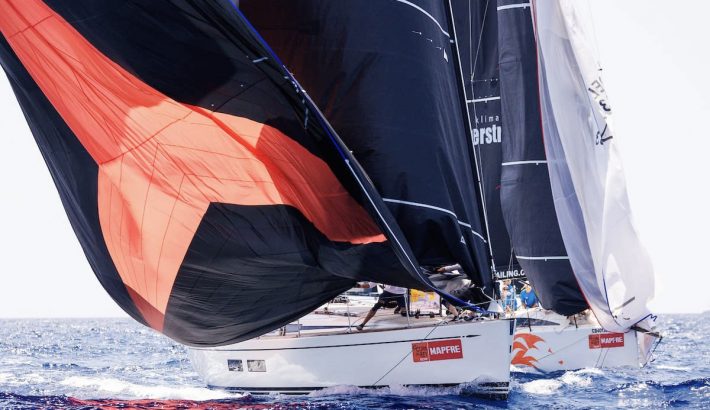
43rd Copa del Rey MAPFRE elevates the game with ORC European Championship debut

The 43rd Copa del Rey MAPFRE, one of the Mediterranean’s most prestigious sailing regattas, will take place from July 26 to August 2, 2025, in the stunning Bay of Palma, Mallorca. This year’s edition is set to be one of the most ambitious yet, bringing together top international crews, cutting-edge yachts, and a strong institutional presence.

For the first time, the event will also serve as the ORC European Championship, with coastal courses around the islands of Dragonera and Cabrera integrated into the competition. This innovation adds a new level of challenge and prestige, especially for the ORC 0, A, B, and C categories.

Over 135 boats from more than 20 countries have already registered, with the ORC B class being the largest and most competitive, featuring 35 yachts. Among the favorites is Katara, the defending champion skippered by Julián Soldini, facing strong challengers like L’Immens and Guardamaro.

The regatta also places a spotlight on women’s sailing through the Women’s Cup, now in its fourth year. Fourteen all-female teams will compete, including one from Brazil and a notable entry from the Spanish Navy. For the first time, it’s also possible that Princess Leonor could participate, joining her father, King Felipe VI, who traditionally sails aboard the TP52 “Aifos” representing the Spanish Navy in the ORC 0 class.

With a perfect blend of elite competition, international participation, and royal presence, the 43rd Copa del Rey MAPFRE promises to be a landmark edition in the history of this iconic regatta.

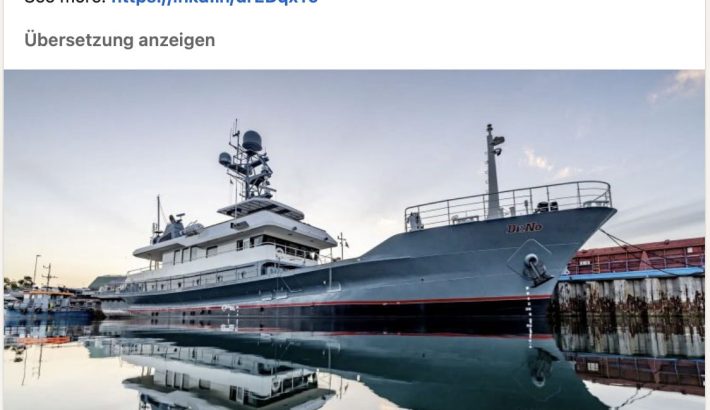
Famous 37 m Explorer MY Dr. No Sold

Famous 37 m Explorer MY Dr. No sold, with William Bishop of Superyacht Partners introducing the buyer, and Anja Eckart of Flensburger Yacht Services representing the seller.

Read the full article on SuperYachtTimes: https://www.superyachttimes.com/yacht-news/narasaki-yacht-dr-no-sold

Dr. No is a renowned explorer yacht originally built in 1995 as a Japanese Government Class fisheries academy vessel. It was later purchased and extensively refitted by tech entrepreneur Tom Perkins, who transformed Dr. No into into a world-class expedition vessel.

The refits by HYS Yachts, completed in 2011, retained much of the vessel’s original robust design while redesigning the interior and the wheelhouse extensively. but added luxury elements suited for long-range exploration and high-seas expeditions. Subsequent refits added refined design elements consistent with its Japanese origin.

Dr. No is an explorer yacht capable of enduring harsh marine conditions, with an emphasis on long-range, self-sufficient cruising.

Tom Perkins intended the yacht to serve as an adventure vessel for expeditions to remote locations, equipped with all necessary technologies and amenities for extended periods at sea.

Dr. No was designed for long-distance ocean travel, capable of navigating challenging environments with minimal environmental impact and low fuel consumption.

Classic S&S So Fong 1937 Sold: ‘The Elegant Lady’ Returns Home to HongKong

Classic S&S So Fong 1937: ‘The Elegant Lady’ Returns Home to HongKong

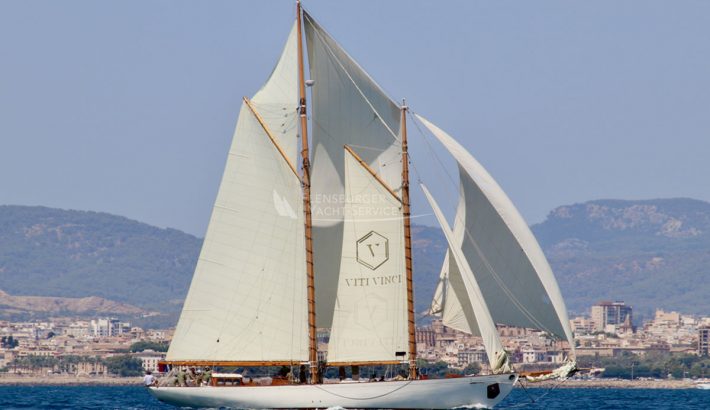
After 88 years of extraordinary history, So Fong, the 82 foot classic gaff-rigged schooner designed by Sparkman & Stephens and built in Hong Kong in 1937, has completed the final chapter of her remarkable journey. The elegant lady is now set to return to the place where it all began: Hong Kong.

Her journey has spanned oceans, continents, and decades, making her one of the most storied yachts in maritime history. From her inception as a long-distance voyaging yacht commissioned by New Jersey banker A. Thornton Baker, So Fong has lived a life filled with adventure, historical significance, and intrigue.

Throughout her 88 years, So Fong has crossed the Atlantic three times, circumnavigated the globe, and even served as a US Navy coast guard vessel during World War II. However, her adventures took a darker turn when, during the Cold War, the yacht was held hostage by the Vietnamese government for over ten years. She was eventually rescued in 1990 by Irish yachtsman Robert Verschoyle, who negotiated her release and oversaw a meticulous refit that would restore So Fong to her former glory.

Her rebirth included a complete unrigging, new deck rails, and even the replacement of the main boom. The masts, still the originals, stand as a testament to the yacht’s storied past. Since then, So Fong has been lovingly maintained gaining admiration for her historical significance and undeniable beauty.

In 2006, So Fong won the prestigious Rolex Voiles de St Tropez, competing in the Epoque Gaff-Class category. Her continued participation in classic yacht regattas has made her a favorite among yachting enthusiasts, admired for her beauty, her heritage, and her exceptional craftsmanship.

The Return Home

Now, after a long and colorful history, So Fong is back in the hands of a new owner: an American businessman residing in Hong Kong. The yacht, which was originally built in Hong Kong in 1937, will return to the place of her birth, where she will once again take pride of place among a fleet of classic yachts.

This new chapter is full of promise, as the buyer, a dedicated lover of classic yachts, is no stranger to So Fong’s history. The captain, who now manages his entire fleet, was once involved with So Fong in a previous life and knows the yacht’s savior, Robert Verschoyle, who rescued her from near ruin in Vietnam. With such a knowledgeable team at the helm, So Fong is in good hands and ready to continue her legacy.

A Timeless Classic

So Fong’s return to Hong Kong marks the completion of a full circle, from her origins in the bustling shipyards of Causeway Bay to her final destination on the waters of the South China Sea. The yacht, with her stunning craftsmanship, elegant design, and remarkable history, has become an icon in the world of classic yachts.

For many, So Fong is more than just a yacht; she is a piece of living history. Her beautiful lines, impeccable restoration, and fascinating journey through time make her a rare find in the world of yachting. Whether competing in regattas, cruising the world’s oceans, or serving as a floating tribute to maritime heritage, So Fong will continue to be admired and loved for years to come.

A Special Sale

S&S So Fong 1937 was listed with Flensburger Yacht Service, based in Mallorca, and successfully sold by Anja Eckart, who closed this unique sale. We are proud to have been part of this incredible journey and look forward to hearing more about her adventures as she returns home to Hong Kong.

Link to SuperYachtTimes:
https://www.superyachttimes.com/yacht-news/ah-king-yacht-so-fong-sold

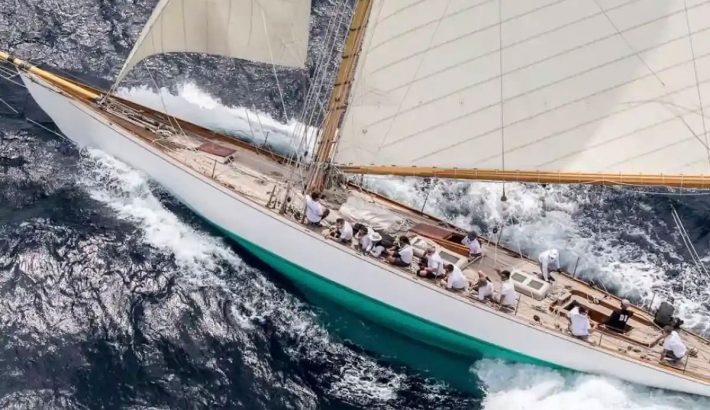
A Once-in-a-Lifetime Opportunity to Sail on the Iconic 15-Metre William Fife Classic Yacht Mariska 1908

A Once-in-a-Lifetime Opportunity to Sail on the Iconic 15-Metre William Fife Classic Yacht Mariska 1908 ⛵️✨
Make Your Dream Come True: Exclusive Season Opening Offer – Only €2000 for four unforgettable days of regatta sailing!

Join us for an exciting and unique sailing experience during the San Remo Classic Regatta from May 28th to 31st, 2025, where a thrilling match race will take place between Mariska and her sister ship Tuiga, the flagship of the Royal Yacht Club of Monaco (YCM). Tuiga was purchased by Prince Albert II to serve as the YCM’s flagship, recognizing her as “one of the most beautiful yachts in the world.” Don’t miss your chance to check this off your bucket list and race on one of these stunning beauties!

🌟 What Makes This Event Special:
Sail on Mariska, a stunning classic yacht, and experience the excitement of racing in one of the most beautiful regattas in the Mediterranean.
Train with us for 1 day before the regatta and compete over 3 exhilarating days against Tuiga, the flagship of the Royal Yacht Club of Monaco.
Enjoy the great team and amazing atmosphere onboard—Mariska is known for its welcoming, professional crew and fantastic camaraderie.
Cocktail night onboard included, where you can celebrate with your fellow sailors in style.

🌟 Event Details:
Dates: May 28–31, 2025 + Training Day before the event
Price: €2000 per person for 4 days of sailing
Capacity: Up to 12 guests onboard + 10 of Mariska’s pro race crew
Minimum requirement: 10 people to sign up for the event to happen
What’s Included in the Regatta Package:
1 fun Training Day before the regatta to get you up to speed
Lunch boxes, drinks, snacks, and morning coffee
Sunscreen, gloves, wet weather gear, and life jackets available onboard
Mariska t-shirt and cap/hat to match the team
Professional race crew of 10 onboard
What’s Not Included: Sailing shorts, Sailing shoes, Accommodation, Evening dinners

🌟Regatta Schedule:
Training Day: Meet the crew and get an introduction to Mariska, followed by safety briefings, team assignments, and preparation.
Racing Days: Enjoy exciting sailing, training, and races with lunch onboard. At the end of each day, a debriefing with drinks onboard. Evening social events, such as dinner or cocktails, organized by the regatta hosts.
I will also be part of the crew onboard, having participated last year, and it was an experience I truly loved. Being part of this fantastic team is a privilege, and I can’t wait to share this adventure with you!
Don’t miss this exclusive opportunity to sail, race, and create memories of a lifetime on one of the most legendary classic yachts in history.
🌟 Secure your spot now! Contact me for more details or to sign up.

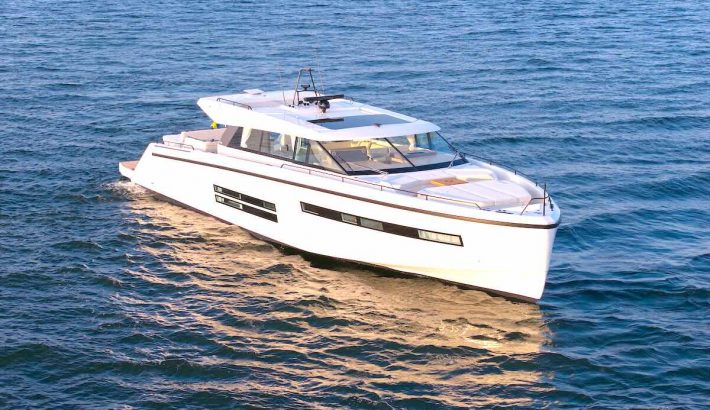
DELTA POWERBOATS 48 COUPÉ AT BOOT DÜSSELDORF 2025

SAVE THE DATE:

💙 Delta Powerboats at boot Düsseldorf 💙
Sat, Jan 18, 2025 – Sun, Jan 26, 2025

Join us and the wonderful carbon Delta 48 Coupé in
📍 Hall 5 at Stand E02.

Please feel free to make your appointment today to make sure to experience the stunning Delta 48 Coupé in person. Let us know if you’d like us to send your tickets in advance.

We look forward to seeing you at the show!

About this stylish beauty:
The Delta 48 Coupé features a twin stepped-bottom design, reducing friction, enhancing speed, and ensuring a smooth, consistent plane with minimal pitching. Constructed using advanced carbon fiber composites, the hull is strong, stiff, and highly impact-resistant.
This inboard version is powered by Twin Volvo Penta D6 440 engines, reaching speeds of up to 42 knots while maintaining low fuel consumption. At a cruising speed of 30.5 knots, fuel consumption is as low as 3.4L/nm, thanks to her lightweight displacement of just 17,636 pounds dry.

The large electrical glass sunroof ensures the 48 adapts easily to changing weather and sliding aft- and side doors blur the boundaries between the inner and outer decks.

A high-performance, premium powerboat for owners who crave a thrilling ride and exceptional handling. Its advanced materials and design features make it an attractive choice for those seeking a reliable and durable powerboat.

We look forward to seeing you at the show!

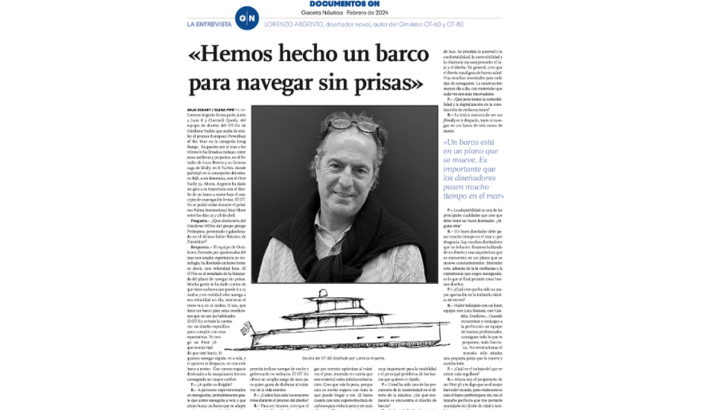
Entrevista con Lorenzo Argento, el diseñador del nuevo OT-60 y OT-80 del astillero Omikron de Grecia

«Hemos hecho un barco para navegar sin prisas»

Lorenzo Argento forma parte, junto a Juan K y Ciarmoli Queda, del equipo de diseño del OT-6o de Omikron Yachts que acaba de recibir el premio European Powerboat of the Year en la categoría Long Range. Su pasión por el mar y los veleros le ha llevado a trabajar, entre otros astilleros y proyectos, en el Estudio de Luca Brenta y su famosa saga de Wally; en B Yachts, donde participó en la concepción del exitoso B38, o en Beneteau, con el First Yacht 53. Ahora, Argento ha dado un giro a su trayectoria con el diseño de un barco a motor bajo el concepto de «navegación lenta». El OT-6o se podrá visitar durante el próximo Palma International Boat Show entre los días 25 y 28 de abril.

Pregunta.- ¿Qué destacaría del Omikron OT6o del grupo griego Prokopiou, presentado y galardonado en el último Salón Náutico de Düsseldorf?

Respuesta.- El equipo de Omikrom, formado por apasionados del mar con amplia experiencia en tecnología, ha diseñado un barco lento, es decir, con velocidad baja. El OT6o es el resultado de la búsqueda del placer de navegar sin prisas.

Mucha gente se ha dado cuenta de que tiene un barco que puede ir a 25 nudos y en realidad sólo navega a esa velocidad un día, mientras el resto va a 1o-11 nudos. O sea, que tiene un barco para unas condiciones que no son las habituales.

El OT-6o es todo lo contrario: un diseño específico para cumplir con esas expectativas. Yo tengo un First 36 que va más rápido que este barco. Si quieres navegar rápido, ve a vela, y si quieres ir despacio, ve con este barco a motor. Con menos espacio destinado a la maquinaria hemos conseguido un mayor confort.

P.- ¿A quién va dirigido?

R.- A patrones experimentados en navegación, probablemente gente que antes navegaba a vela y que ahora busca un barco que se adapte mejor a su nueva situación, que permita incluso navegar de noche y gobernarlo en solitario. El OT 60 ofrece un amplio rango de usos para quien gusta de disfrutar al máximo de la vida exterior.

P.- ¿Cuáles han sido los mayores retos durante el proceso del diseño?

R.- Para ser sincero, creo que el uso de cristal ha sido el precio a pagar por intentar optimizar al máximo el peso, teniendo en cuenta que este material rodea toda la embarca-ción. Creo que vale la pena, porque uno se siente seguro con todo lo que puede llegar a ver. El barco cuenta con una superestructura de carbono para reducir peso y ser más eficiente. El peso es un elemento muy importante para la estabilidad y el principal problema de los barcos que quieren ir rápido.

P.- Usted ha sido uno de los precursores de la modernidad en el diseño de la náutica. ¿En qué momento se encuentra el diseño de barcos?

R.- Se ha redefinido el concepto de lujo. Se prioriza la quietud y la confortabilidad, la sostenibilidad y la eficiencia sin comprometer el lujo y el diseño. En general, creo que el diseño naval goza de buena salud.

Hay muchas novedades para todo tipo de navegantes. La construcción mejora día a día, con materiales que cada vez son más innovadores.

P.- ¿Qué peso tienen la sostenibilidad y la digitalización en la construcción de embarcaciones?

R.- La única manera de ser eco friendly es ir despacio, tanto si navegas en un barco de vela como de motor.

«Un barco está en un plano que se mueve. Es importante que los diseñadores pasen mucho tiempo en el mar»

P.- La adaptabilidad es una de las principales cualidades que cree que debe tener un buen diseñador. ¿Alguna otra?

R.- Un buen diseñador debe pasar mucho tiempo en el mar y, por desgracia, hay muchos diseñadores que no lo hacen. Estamos hablando de un diseño y una arquitectura que se encuentra en un plano que se mueve constantemente. Entender esto, además de la la confianza y la experiencia que coges navegando, es lo que al final permite crear buenos diseños.

P.- ¿Cuál cree que ha sido su mayor aportación en la industria náutica de recreo?

R.- Haber trabajado con un buen equipo: con Luca Bassani, con Candela, Omikron… Cuando encuentras y conjugas a la perfección un equipo de buenos profesionales, consigues todo lo que te propones, todo funcio-na. No revolucionas el mundo, sólo añades una pequeña pieza que lo mueve y cambia todo.

P.- ¿Cuál es el trabajo del que se siente más orgulloso?

R.- Ahora soy el propietario de un First 36 y te digo que es el mejor barco del mundo, pero realmente es solo el barco perfecto para mí, con el tamaño perfecto que me permite manejarlo sin límite de edad y también mantenerlo.